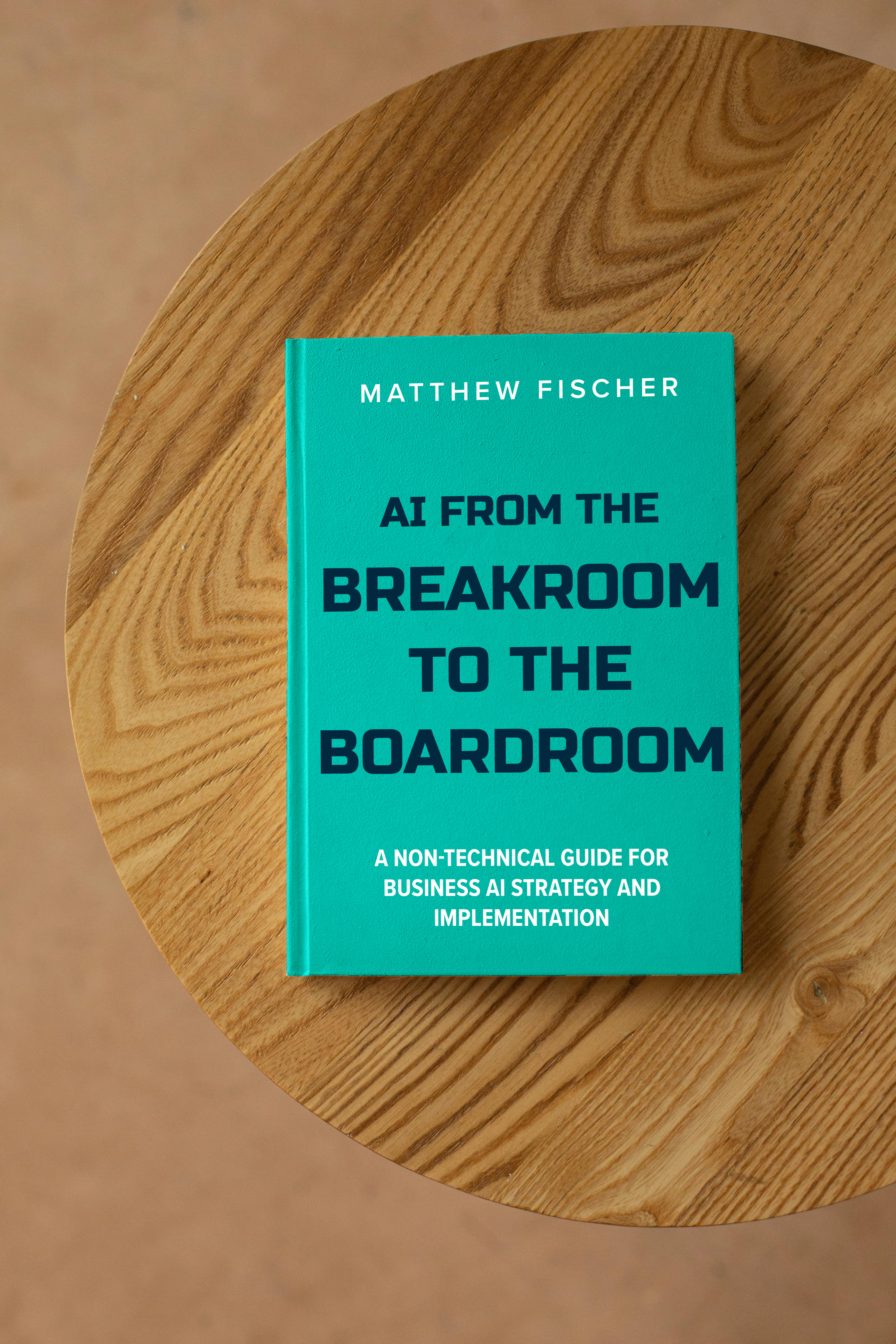
Most books talk about what AI can do. This one shows how your organization needs to structurally change to use it well — and gives you the frameworks to understand how to restructure and stay competitive as the landscape keeps shifting.
Who It's Written For
Leaders at every level — from CEOs architecting a 3-year AI vision, to department heads trying to understand how AI changes their team's role, to the managers and individual contributors on the front line who are being told to "use AI" without any structural guidance on how.
The title says it all: this book travels the full distance from break room to boardroom — because real AI transformation has to.
What Makes It Different
This book was written by practitioners, not theorists. Every framework, model, and recommendation in it was tested inside real organizations before it made it onto the page.
One of our co-authors is a futurist — so the book doesn't just describe the current AI landscape. It maps where adoption is heading, what organizations need to build now to remain competitive, and how to design structures that won't need to be rebuilt when the landscape shifts again in 18 months.
The Central Argument
AI adoption fails when it's treated as a technology problem. It succeeds when it's treated as an organizational design challenge.
The organizations winning with AI right now aren't winning because they have the best tools — they're winning because they've designed structures that make AI a coherent, governed, enterprise-wide capability rather than a collection of disconnected individual experiments.
Inspired by the Field
This book emerged from two years of weekly conversations with executive teams across industries who were wrestling with the same fundamental question: where do we even start?
It's also inspired by the next generation entering the workforce — students preparing for roles that may not exist by the time they graduate, who are being asked to navigate an AI landscape with no structural guide. This book is partly written for them too.